

Many believe slathering on moisturiser is enough to maintain youthful skin, but true skin health involves far more complex biological processes. From the structural integrity of your extracellular matrix to how environmental factors accelerate aging, this guide unpacks the science behind effective non-surgical skin rejuvenation. We’ll explore skin structure, aging mechanisms, common myths, personalised treatments, and practical strategies for adults in East London seeking evidence-based solutions.
Table of Contents
-
Applying skin health knowledge: choosing treatments and maintaining results
-
Explore personalised non-surgical skin solutions at FaceUp Skin Studio
Key takeaways
| Point | Details |
|---|---|
| Biological foundations | Skin health depends on barrier function, hydration balance, and collagen matrix integrity for firmness and elasticity. |
| Environmental aging | UV radiation and pollution are major extrinsic factors, contributing up to 80% of visible aging signs. |
| Personalised approach | Tailored skin assessments increase treatment efficacy by up to 75% and reduce adverse effects by 25%. |
| Moisturiser limitations | Moisturisers provide temporary hydration but cannot replace lost collagen or fully prevent aging processes. |
| Non-surgical options | Treatments like microneedling boost collagen production by 400% and stimulate natural skin repair mechanisms. |
Understanding skin health: biological foundations
Your skin acts as the body’s primary protective barrier, shielding you from pathogens, toxins, and environmental stressors. But barrier protection is just one function. Skin health fundamentally relies on three interconnected biological systems: barrier function, hydration regulation, and the extracellular matrix.
The outermost layer, your stratum corneum, maintains hydration through a delicate balance of lipids and natural moisturising factors. When this balance falters, you experience dryness, sensitivity, and increased vulnerability to irritants. Deeper within the dermis, the extracellular matrix composed of collagen and elastin fibres provides structural support that keeps skin firm and elastic.
These biological systems work together to maintain essential skin functions:
-
Barrier protection against external threats
-
Hydration regulation through lipid layers
-
Immune defence via specialised cells
-
Repair mechanisms for tissue regeneration
When any of these functions deteriorates, visible signs emerge: fine lines, sagging, uneven texture, or increased reactivity. Understanding these foundations helps you make informed decisions about personalised skin treatments that address root causes rather than superficial symptoms.
Effects of aging and environment on skin health
Aging impacts skin through two distinct pathways: intrinsic (biological) and extrinsic (environmental). Intrinsic aging is genetically programmed, causing approximately 1% annual collagen loss starting in your mid-twenties. This gradual decline eventually manifests as reduced firmness and slower wound healing.
Extrinsic factors, however, accelerate visible aging far more dramatically. UV radiation accounts for 80% of visible aging signs, damaging collagen fibres and triggering oxidative stress that breaks down skin structure. Even brief unprotected sun exposure accumulates over time, creating wrinkles, pigmentation, and textural changes.
Pollution compounds these effects. Studies show pollution exposure accelerates aging by 30% through oxidative stress pathways that overwhelm your skin’s natural defence systems. Particulate matter penetrates the epidermis, generating free radicals that degrade collagen and elastin.
Critical aging statistics:
-
1% annual collagen loss from mid-adulthood onwards
-
80% of visible aging attributable to UV damage
-
30% acceleration in aging from pollution exposure
-
50% elastin reduction by age 50 in sun-exposed areas
Protective strategies must prioritise shielding against UV radiation and environmental pollutants. Daily broad-spectrum sun protection and antioxidant-rich formulations create a defensive foundation. Yet protection alone cannot reverse existing damage, which is why targeted treatments become essential for comprehensive skin health management.
Pro Tip: Apply sun protection 365 days yearly, even on overcast days. UVA rays penetrate clouds and glass, causing cumulative photoaging regardless of weather conditions.
Common misconceptions about skin health
The skincare industry perpetuates several myths that misguide well-intentioned efforts. Perhaps the most persistent misconception is that moisturisers can prevent or reverse wrinkles. Whilst moisturisers temporarily plump the skin surface by increasing water content, they cannot rebuild lost collagen or restore deep structural support.
Another widespread belief is that harsh cleansers provide superior cleaning. In reality, overuse of harsh cleansers disrupts your skin’s acid mantle, raising pH levels and compromising barrier integrity. This leads to increased dryness, sensitivity, and vulnerability to bacterial colonisation.
Key misconceptions to abandon:
-
Moisturisers replace lost collagen (they only hydrate temporarily)
-
Harsh cleansing improves skin (it damages protective barriers)
-
Anti-aging needs only topical products (regenerative treatments are essential)
-
Expensive always means effective (formulation quality matters more than price)
Effective skin health requires balancing gentle cleansing, environmental protection, and regenerative interventions. Topical products play a supporting role, maintaining hydration and delivering active ingredients. However, structural improvements demand treatments that stimulate your skin’s natural repair mechanisms at deeper dermal levels.
Pro Tip: Choose pH-balanced cleansers (4.5 to 5.5) that respect your skin’s natural acidity. This simple switch reduces irritation whilst maintaining effective cleansing.
The role of personalisation in optimising skin health
Generic skincare approaches often fail because skin varies dramatically between individuals. Age, genetics, lifestyle, environmental exposure, and existing concerns create unique baseline conditions requiring tailored strategies. Personalised assessments identify your specific needs, leading to measurably better outcomes.

Research demonstrates that customised treatment plans increase efficacy by up to 75% compared to standardised protocols. Equally important, personalisation reduces adverse effects by 25% by avoiding ingredients or intensities unsuitable for your skin type. This precision approach maximises benefits whilst minimising risks.
Critical factors in personalisation include:
-
Skin type classification (oily, dry, combination, sensitive)
-
Barrier integrity assessment
-
Specific aging signs and severity
-
Previous treatment responses
-
Environmental exposure levels
-
Medical history and contraindications
Professional consultations establish comprehensive baselines through visual assessment, sometimes supplemented by tools measuring hydration, elasticity, or pigmentation. These objective measurements track progress and inform adjustments, ensuring treatments evolve with your skin’s changing needs.
Pro Tip: Document your skin condition with consistent lighting and angles before starting any new treatment. This visual record helps you objectively assess progress rather than relying on subjective impressions.
Non-surgical treatment options for skin health improvement
Modern aesthetic medicine offers evidence-based interventions that stimulate natural repair processes without surgical procedures. These treatments work through various mechanisms to address different aspects of skin aging and damage.
Microneedling creates controlled micro-injuries that trigger your body’s wound healing cascade. Studies confirm microneedling increases collagen production by 400% within six weeks post-treatment. The procedure improves texture, reduces scarring, and enhances product absorption with minimal downtime.
Chemical peels use calibrated acids to remove damaged surface layers, promoting cellular turnover and revealing fresher skin beneath. Depth and acid type are matched to your concerns: glycolic for texture, salicylic for congestion, or trichloroacetic for deeper rejuvenation.
Topical antioxidants combat oxidative stress that accelerates aging. Research shows antioxidants reduce oxidative markers by 40% after twelve weeks of consistent use. Vitamins C and E, ferulic acid, and niacinamide offer protective and reparative benefits.
| Treatment | Mechanism | Primary Benefits | Downtime |
|---|---|---|---|
| Microneedling | Collagen induction | Texture, scars, firmness | 2-3 days |
| Chemical peels | Controlled exfoliation | Tone, pigmentation, renewal | 3-7 days |
| Topical antioxidants | Oxidative stress reduction | Protection, brightening | None |
| Laser therapy | Targeted dermal heating | Deep rejuvenation, vessels | 5-10 days |
Laser therapies deliver precise energy to deeper dermal layers, stimulating collagen remodelling and targeting specific concerns like pigmentation or vascular lesions. Fractional lasers create microscopic treatment zones, preserving surrounding tissue for faster healing.
Selecting appropriate treatments requires matching mechanisms to concerns. Pigmentation responds well to peels and certain lasers, whilst loss of firmness benefits more from microneedling or radiofrequency. Professional guidance ensures optimal treatment selection and sequencing.
Pro Tip: Combine treatments strategically rather than simultaneously. Space interventions 4 to 6 weeks apart, allowing complete healing and maximising cumulative benefits without overwhelming your skin.
Conceptual framework for understanding skin health
Organising skin health strategies into a structured framework clarifies treatment timing and selection. The three-phase model (protection, repair, renewal) provides a practical roadmap for comprehensive care.
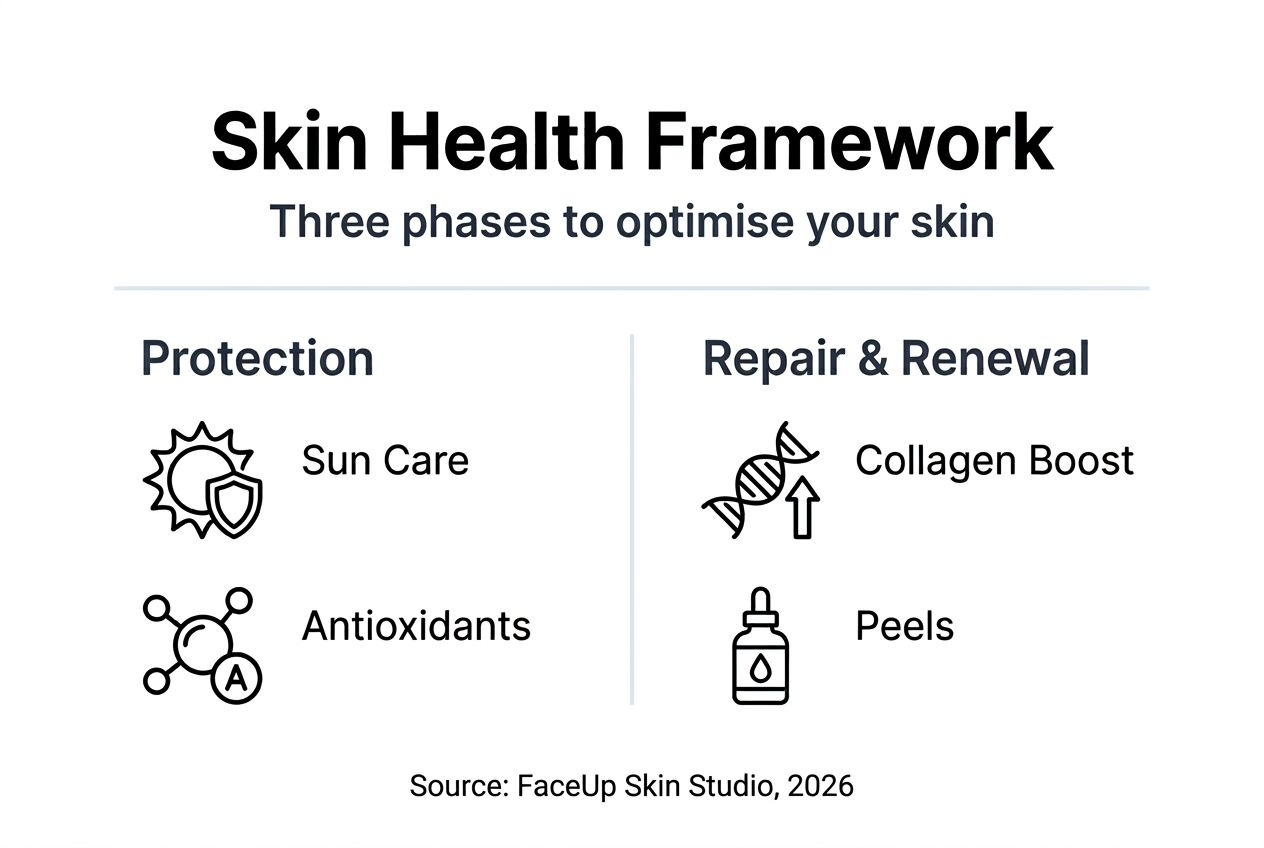
Phase 1 focuses on protection: preventing further damage through UV shielding, antioxidant application, and pollution defence. This foundational phase is ongoing, creating a stable environment for subsequent interventions. Without robust protection, repair efforts constantly battle new damage.
Phase 2 addresses repair: regenerative treatments that stimulate collagen synthesis, improve barrier function, and reverse existing damage. Microneedling, LED therapy, and targeted serums fall within this phase. Repair interventions are typically periodic, scheduled based on treatment protocols and skin response.
Phase 3 centres on renewal: accelerating cellular turnover through exfoliation, peels, or retinoids. This phase removes damaged surface cells and stimulates fresh cell generation. Renewal treatments complement repair efforts, optimising results through synergistic mechanisms.
Research indicates frameworks dividing maintenance into protection, repair, and renewal improve treatment efficacy by 20 to 30%. This structure prevents overwhelm, guides budget allocation, and ensures balanced attention to prevention and correction.
| Phase | Primary Focus | Example Interventions | Frequency |
|---|---|---|---|
| Protection | Prevent damage | SPF, antioxidants, barriers | Daily |
| Repair | Stimulate healing | Microneedling, LED, growth factors | Monthly |
| Renewal | Accelerate turnover | Peels, retinoids, exfoliation | Weekly to monthly |
Applying this framework means establishing consistent daily protection, scheduling periodic repair treatments, and incorporating regular renewal practices. This layered approach addresses skin health comprehensively rather than focusing narrowly on single concerns.
Applying skin health knowledge: choosing treatments and maintaining results
Translating knowledge into action requires systematic steps tailored to your unique situation. Begin with professional assessment to establish baseline skin type, sensitivity level, and priority concerns. This initial evaluation informs all subsequent decisions.
Implement consistent foundational habits:
-
Apply broad-spectrum SPF 30+ every morning
-
Use pH-balanced, gentle cleansers twice daily
-
Incorporate antioxidant serums in morning routines
-
Maintain adequate hydration with suitable moisturisers
-
Remove makeup thoroughly before sleep
Select treatments based on clinical assessment rather than trends. If pigmentation is your primary concern, prioritise interventions proven effective for melanin reduction. For texture issues, focus on collagen-stimulating modalities. Avoid the temptation to address every concern simultaneously, which often dilutes results.
Schedule regular follow-ups every 6 to 12 weeks to monitor progress objectively. Skin changes gradually, making short-term assessments unreliable. Professional tracking identifies what works, what needs adjustment, and when to introduce new interventions.
Maintenance routines sustain improvements achieved through professional treatments. Continue protective measures religiously, as UV exposure can quickly reverse months of progress. Consider maintenance treatments at extended intervals to preserve collagen levels and cellular turnover rates.
Pro Tip: Photograph your skin monthly under identical conditions (same location, lighting, angle, time of day). These consistent records reveal subtle improvements easily missed in daily mirror checks, providing motivation and objective feedback.
Expert guidance streamlines this process, eliminating guesswork and accelerating results through evidence-based protocols matched precisely to your skin’s requirements.
Explore personalised non-surgical skin solutions at FaceUp Skin Studio
Understanding skin health principles is the first step; implementing them effectively requires expert guidance tailored to your unique needs. FaceUp Skin Studio in Walthamstow, East London specialises in evidence-based, non-surgical treatments designed specifically for adults seeking personalised anti-aging and skin rejuvenation solutions.

Our comprehensive approach begins with detailed skin assessment, identifying your specific concerns, skin type, and treatment priorities. We then design bespoke treatment plans combining proven modalities like microneedling, chemical peels, and antioxidant therapies to address your goals systematically.
Located conveniently in East London, FaceUp Skin Studio offers professional expertise in advanced skin health optimisation. Schedule a consultation to discuss how personalised, non-surgical treatments can help you achieve and maintain optimal skin health in 2026 and beyond.
Frequently asked questions
What is the difference between intrinsic and extrinsic skin aging?
Intrinsic aging is the natural, genetically programmed process causing gradual collagen loss of approximately 1% annually from mid-adulthood. Extrinsic aging results from external factors like UV radiation, pollution, and lifestyle choices, accounting for up to 80% of visible aging signs including wrinkles, pigmentation, and texture changes. Extrinsic factors are largely preventable through protective measures, whilst intrinsic aging is inevitable but manageable.
Can moisturisers prevent wrinkles and skin aging?
Moisturisers provide temporary surface hydration by increasing water content in the stratum corneum, creating a plumper appearance. However, they cannot replace lost collagen, rebuild elastin networks, or reverse structural aging processes occurring in deeper dermal layers. Effective anti-aging requires regenerative treatments that stimulate collagen synthesis and repair mechanisms beyond what topical hydration alone can achieve.
How do non-surgical treatments like microneedling improve skin health?
Microneedling creates controlled micro-injuries that trigger your body’s natural wound healing response, boosting collagen production by 400% within weeks. This process repairs damaged tissue, improves texture, reduces scarring, and enhances firmness with minimal downtime. The treatment works by stimulating fibroblast activity and increasing growth factor release, promoting genuine structural improvements rather than temporary surface changes.
Why is personalised skin assessment important before treatment?
Personalised assessment identifies your unique skin type, sensitivity levels, specific concerns, and contraindications, ensuring treatments match your individual requirements. This precision approach increases treatment efficacy by up to 75% and reduces adverse effects by 25% compared to generic protocols. Without proper assessment, you risk choosing ineffective treatments or experiencing unnecessary side effects from unsuitable interventions.