
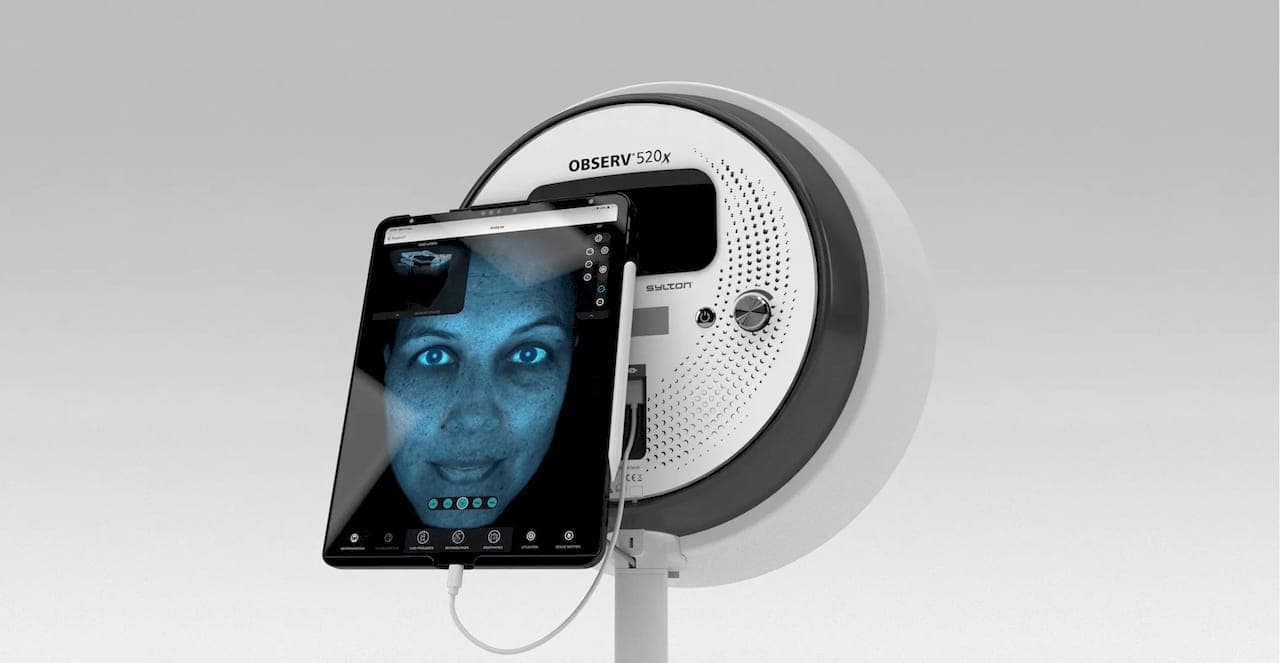
You might think you know your skin. You cleanse it daily, apply the right moisturiser, and still find yourself dealing with breakouts, uneven tone, or dullness that refuses to shift. The truth is, most skin concerns have causes that sit well beneath the surface, invisible to even the most attentive mirror check. Professional skin analysis changes that entirely. Using advanced tools like the Observ 520x imaging device, clinicians can reveal photodamage, dehydration, and pigmentation that standard visual checks simply miss. This guide walks you through what modern skin analysis involves, why it matters, and what to expect when you want genuinely better results from your skincare.
Key Takeaways
| Point | Details |
|---|---|
| Deeper insight | Skin analysis reveals hidden issues that normal checks often miss. |
| Method matters | Advanced technology like VISIA and AI offer objective data, but expert review is essential. |
| Personalisation wins | Your skin care is most effective when based on professional analysis, not guesswork. |
| Know the limits | Skin analysis supports, but does not replace, medical diagnoses for complex conditions. |
What is skin analysis and why does it matter?
Skin analysis is far more than a quick look under a bright light. As a field, clinical skin analysis is a non-invasive assessment process used in dermatology and aesthetics to evaluate skin condition, identifying visible and subsurface issues like pigmentation, wrinkles, pores, hydration, and photodamage to inform personalised skincare and treatments. That definition matters because it shifts the focus from what you can see to what is actually happening inside the skin’s layers.
Many common concerns, including uneven skin tone, persistent dryness, and early signs of ageing, have layered causes. A patch of hyperpigmentation might look like a simple sun spot, but beneath the surface it could reflect years of UV accumulation, hormonal shifts, or post-inflammatory changes. Without proper analysis, you are essentially guessing.
Here is why that guesswork is so costly:
-
Ineffective products: Without knowing your true skin type and condition, you may be using formulations that aggravate rather than improve your concerns.
-
Missed early concerns: Subsurface photodamage and dehydration often precede visible ageing by years. Catching them early changes your treatment options.
-
Wasted investment: Aesthetic treatments work best when targeted precisely. Analysis ensures every pound you spend goes towards what your skin actually needs.
-
Delayed results: Generic skincare routines rarely address root causes, which is why so many people plateau despite consistent effort.
For anyone interested in personalised skin health, this science-based approach replaces guesswork with evidence. It gives your practitioner a detailed map of your skin’s current state, so every recommendation, whether that is a targeted serum or a professional treatment, is grounded in real data.
“The most effective skincare plans are not built on what you see in the mirror. They are built on what the data reveals beneath it.”
If you have been following a skin care checklist for pigmentation without seeing consistent improvement, a professional skin analysis is often the missing first step.
Methods and technologies: how skin analysis works
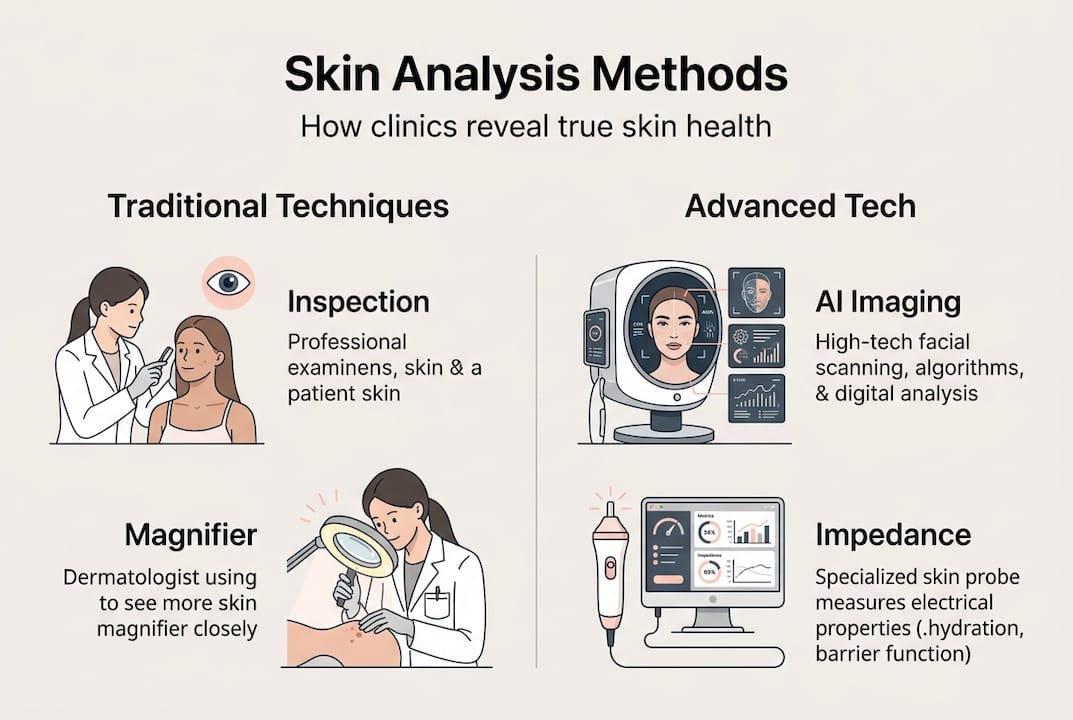
Understanding what skin analysis is sets the stage for considering how it is actually carried out. The field has evolved considerably, and today’s clinics use a combination of hands-on clinical assessment and sophisticated technology to build a complete picture.
Common methodologies include clinical inspection, multispectral imaging such as VISIA, AI photo analysis, impedance for hydration measurement, and advanced imaging like reflectance confocal microscopy (RCM) and optical coherence tomography (OCT). Each method has a specific role.
Key technologies compared
| Method | What it measures | Best used for |
|---|---|---|
| Clinical inspection | Texture, tone, visible lesions | Initial assessment, context |
| Observ 520x / VISIA imaging | Pigmentation, pores, UV damage, redness | Detailed subsurface mapping |
| AI photo analysis | Pattern recognition across skin parameters | Tracking changes over time |
| Impedance measurement | Hydration levels, barrier function | Dry or sensitive skin concerns |
| RCM and OCT | Cellular and structural detail | Complex or clinical cases |
The Observ 520x is a particularly powerful tool in a modern aesthetic clinic. It uses specialised lighting modes, including UV fluorescence and cross-polarised light, to reveal features that are completely invisible under standard lighting. Subsurface pigmentation, congestion, and vascular changes all become visible, giving your practitioner information that would otherwise take months of trial and error to uncover.
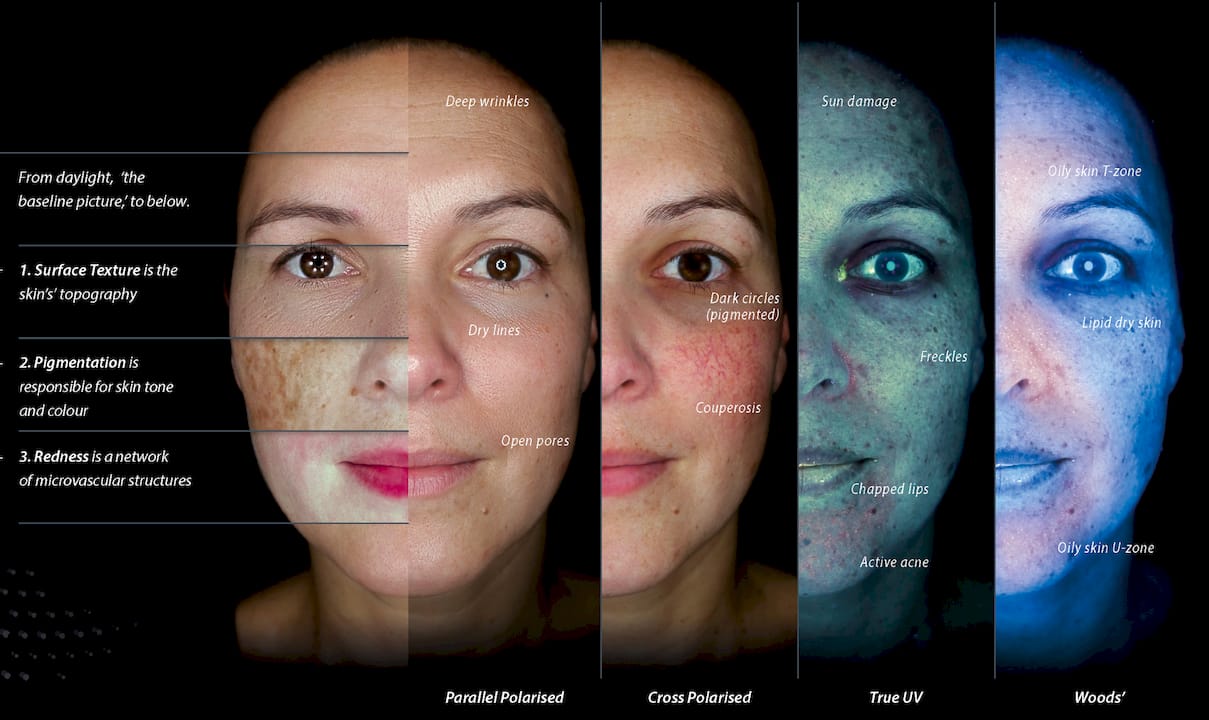
The Observ 520x examines eight parameters, comparing your skin to a database by age, gender, and ethnicity. This means your results are not just a snapshot; they are a meaningful comparison that helps your practitioner understand where you sit relative to others with a similar profile, and where targeted intervention will make the biggest difference.
Here is a typical sequence of how these tools are used in a single appointment:
-
Clinical consultation: Your practitioner discusses your concerns, medical history, and skincare routine.
-
Observ 520x : Multiple photographs are taken under different light spectra.
-
AI or software analysis: The system processes images and generates a detailed report.
-
Hydration and barrier assessment: Impedance tools measure moisture levels and skin barrier integrity.
-
Results review: Your practitioner walks you through the findings and explains what each measurement means for you.
Pro Tip: Arrive at your skin analysis appointment with a clean face and no make-up. Residual product can interfere with imaging accuracy, particularly UV fluorescence modes on devices like the Observ 520x.
For those considering an anti-aging skin assessment, this multi-method approach is especially valuable because ageing affects multiple skin layers simultaneously. Combining technologies gives a far more complete picture than any single tool alone. You can also explore how facial aesthetics and skin health are connected when your analysis informs your broader treatment plan.
The value and limitations of skin analysis
After exploring the strengths of skin analysis tools, it is equally important to recognise their limits. Technology is impressive, but it is not infallible.
AI and VISIA provide strong, repeatable data for common concerns but are not a replacement for medical diagnosis or human expertise, with strengths and weaknesses depending on the scenario. Understanding both sides helps you make an informed decision about what to expect.
Strengths of modern skin analysis tools
-
Objective, repeatable measurements that remove subjectivity from assessment
-
Ability to detect subsurface photodamage and pigmentation years before it becomes visible
-
Standardised scoring that allows meaningful progress tracking over time
-
Fast, non-invasive, and suitable for virtually all skin types
Limitations to be aware of
-
Dataset bias: AI models trained predominantly on lighter skin tones may be less accurate for darker complexions
-
Environmental variables: humidity, temperature, and recent sun exposure can affect readings
-
Rare or complex conditions: devices are not designed to diagnose unusual dermatological presentations
-
No substitute for a medical consultation when symptoms suggest something beyond cosmetic concern
| Scenario | Best approach |
|---|---|
| Pigmentation, pores, early ageing | Imaging and AI analysis with aesthetic practitioner |
| Persistent redness or rosacea | Clinical assessment combined with imaging |
| Suspicious moles or lesions | Dermatologist referral, not aesthetic analysis |
| Dehydration and barrier concerns | Impedance measurement plus clinical review |
“The data from advanced imaging is only as useful as the expertise of the person interpreting it. A skilled practitioner turns numbers into a plan.”
This is why pairing technology with clinical judgement is non-negotiable. At FaceUp Skin Studio, every analysis session is led by an experienced practitioner who contextualises the data within your personal history, lifestyle, and goals. If you are curious about how professional facials fit into a treatment plan informed by analysis, or want a broader guide to skin treatments, those resources offer helpful context.
The key takeaway is this: skin analysis tools are genuinely powerful, but they work best as one part of a broader, expert-led process.
What to expect: your skin analysis in a modern clinic
With the pros and cons in mind, here is what you can actually expect when you book a skin analysis appointment at a clinic equipped with the Observ 520x.
Modern devices break down measurements by skin type, age, and treatment history for extremely targeted plans. That level of personalisation means your results are specific to you, not a generic report.
-
Pre-appointment preparation: You will be asked to arrive with a clean face, no make-up, SPF, or heavy moisturiser. This ensures imaging captures your skin’s true state.
-
Initial consultation: Your practitioner will ask about your concerns, current routine, any medications, and your skin goals. This context shapes how the data is interpreted.
-
Observ 520x imaging session: You will sit comfortably while the device captures your skin under multiple lighting modes. The process takes around ten minutes and is completely painless.
-
Data review: The device generates a detailed visual report showing areas of UV damage, pigmentation depth, vascular activity, and hydration. Your practitioner reviews this with you on screen.
-
Treatment planning: Based on the findings, you will receive a personalised plan. This might include professional treatments, a revised home care routine, or a combination of both.
-
Follow-up scheduling: Many clients benefit from repeat analysis every six to twelve months to track progress and adjust their plan.
AI analysis can reach up to 94% accuracy, but real-world results depend on the clinician’s interpretation. This is why the conversation that follows the imaging is just as important as the imaging itself.
Pro Tip: Before your appointment, write down your three biggest skin concerns and any products you currently use. This saves time during the consultation and helps your practitioner focus the analysis on what matters most to you.
If you are thinking about the next steps after your analysis, exploring the skin rejuvenation process or understanding laser treatment benefits can help you feel prepared. And if you are still deciding where to go, reading about choosing a London skin studio may help you ask the right questions.
Why the best results come from analysis plus expert human care
Here is something we see regularly at FaceUp Skin Studio: a client arrives with imaging data from a home device or a quick scan elsewhere, convinced they know exactly what their skin needs. The data says dehydration. They have been layering on hyaluronic acid for months. Yet their skin is still struggling.
When we run the Observ 520x and sit down with them properly, we often find the real issue is a compromised barrier, not a lack of moisture. The treatment approach changes completely.
This is the uncomfortable truth about skin analysis technology. Human oversight is essential for safe, effective aesthetic plans, and no device replaces the clinical eye that spots what the algorithm missed. AI and imaging are genuinely impressive tools, but they are pattern-recognition systems. They do not know that your skin has been reacting to a new medication, or that your barrier has been stripped by over-exfoliation.
The most transformative outcomes we see come from clients who invest in both: advanced imaging that provides objective data, and an experienced practitioner who interprets it within the full context of their skin story. If you want real change, insist on personalised care that combines technology with genuine expertise. One without the other is simply not enough.
Experience advanced skin analysis and bespoke care in Walthamstow
Ready to see what is really happening with your skin? At FaceUp Skin Studio, we use the Observ 520x alongside expert clinical assessment to give you a genuinely complete picture of your skin’s health. Our experienced practitioners create personalised treatment plans suited to your skin type, age, and goals, whether you are addressing early signs of ageing, pigmentation, or persistent sensitivity.

Every consultation begins with listening to you, then letting the data guide us. No guesswork. No generic advice. Just a clear, evidence-based plan built around your unique skin profile. Explore our latest insights or book your skin analysis consultation today and take the first informed step towards skin you feel genuinely confident in.
Frequently asked questions
Is a skin analysis painful or risky?
Skin analysis is non-invasive and entirely painless, involving no needles, no downtime, and no side effects. It is suitable for virtually all skin types and ages.
How accurate are AI-driven skin analysis devices?
State-of-the-art AI analysis reaches up to 94% accuracy but delivers the best outcomes when a trained practitioner interprets the results within the full context of your skin history.
Can skin analysis detect conditions like cancer?
AI and VISIA are strong for identifying common cosmetic concerns, but they are not a substitute for medical diagnosis. Any suspicious lesions or moles should always be assessed by a qualified dermatologist.
How often should you get your skin analysed?
Most clinics recommend a skin analysis every six to twelve months, or sooner if you notice significant changes in your skin’s texture, tone, or behaviour.