

Most people assume that firmer, younger-looking skin is only possible through surgery. That belief is understandable, but it is no longer accurate. Non-surgical skin tightening refers to aesthetic procedures that use energy-based technologies to stimulate collagen and elastin production, leading to visibly firmer skin without a single incision. For busy adults in Walthamstow who want real results without the recovery time, these treatments represent a genuine shift in what is possible. This guide walks you through the science, the options, and what you can realistically expect.
Key Takeaways
| Point | Details |
|---|---|
| Science-backed solutions | Non-surgical skin tightening uses energy-based technologies to firm skin by boosting collagen and elastin. |
| Customised for your needs | Radiofrequency, ultrasound, and laser treatments are suited to different types of laxity and lifestyle priorities. |
| Gradual, lasting results | Results develop in 2-6 months and can last up to a year with regular maintenance sessions. |
| Best for mild-moderate laxity | These treatments are ideal for early ageing signs but less effective for severe sagging where surgery may be needed. |
| Minimal downtime, high safety | Modern treatments provide noticeable results with minimal side effects, making them ideal for busy adults. |
What is skin tightening?
Skin tightening, in the context of aesthetic medicine explained, describes a category of treatments designed to improve skin firmness and reduce laxity, which is the medical term for looseness or sagging. As we age, the skin produces less collagen and elastin, the two proteins responsible for keeping it plump and resilient. The result is skin that gradually loses its structure and begins to droop.
Non-surgical approaches work by stimulating the body's own repair mechanisms rather than cutting away tissue. This is a fundamentally different philosophy from surgery, and it suits a wide range of adults who want improvement without significant risk or downtime.
Here is what distinguishes non-surgical skin tightening from surgical procedures:
- No incisions or general anaesthesia required
- Minimal to no recovery time for most treatments
- Gradual, natural-looking results that develop over weeks and months
- Repeatable treatments that can be adjusted as your skin changes
- Lower risk profile compared to surgical alternatives
"Skin tightening refers to non-surgical aesthetic procedures that use energy-based technologies to stimulate collagen and elastin production, leading to firmer skin." — Dr Bain Aesthetics
The growing popularity of these treatments is not simply a trend. It reflects a genuine shift in what technology can achieve for skin health without the need for a surgeon's scalpel.
How non-surgical skin tightening works
Understanding the technology behind these treatments helps you make a more informed decision. There are three primary methods used in professional clinics today.
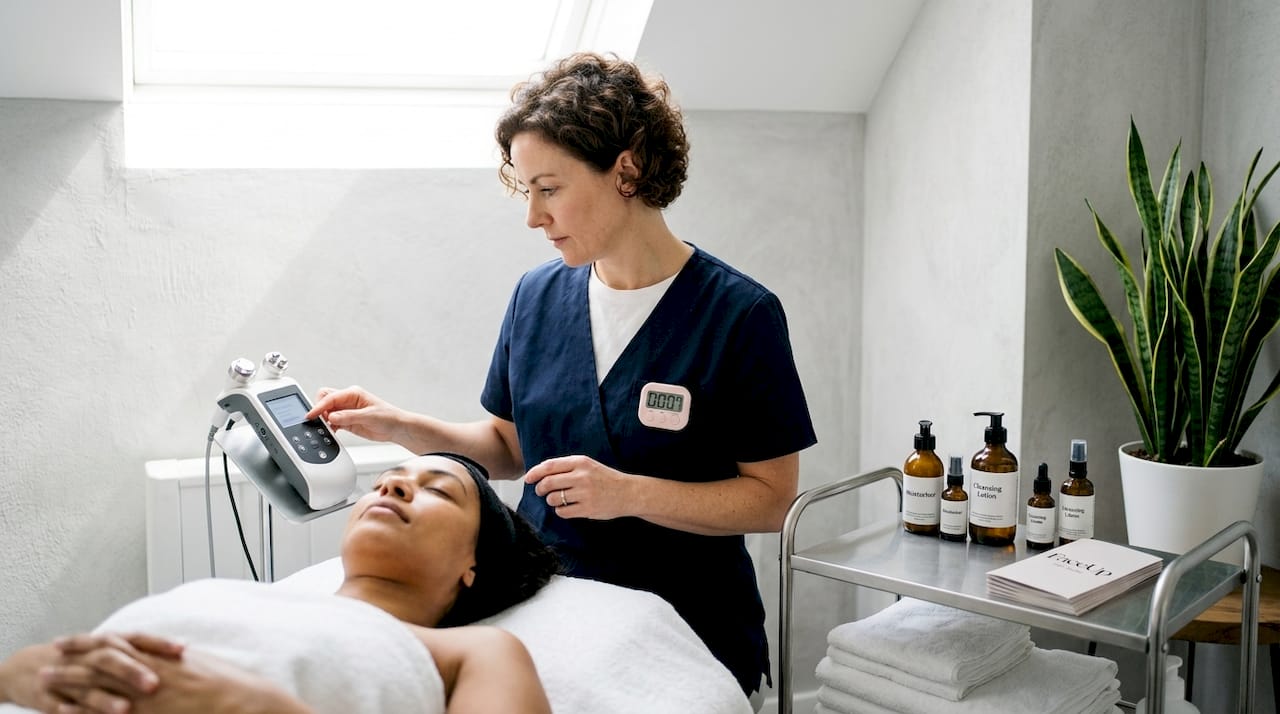
Primary methodologies include radiofrequency (RF), which heats deeper dermal layers evenly; ultrasound such as HIFU (High-Intensity Focused Ultrasound), which focuses energy at precise depths for lifting; and lasers, which target the surface and upper dermis for tightening combined with texture improvement.
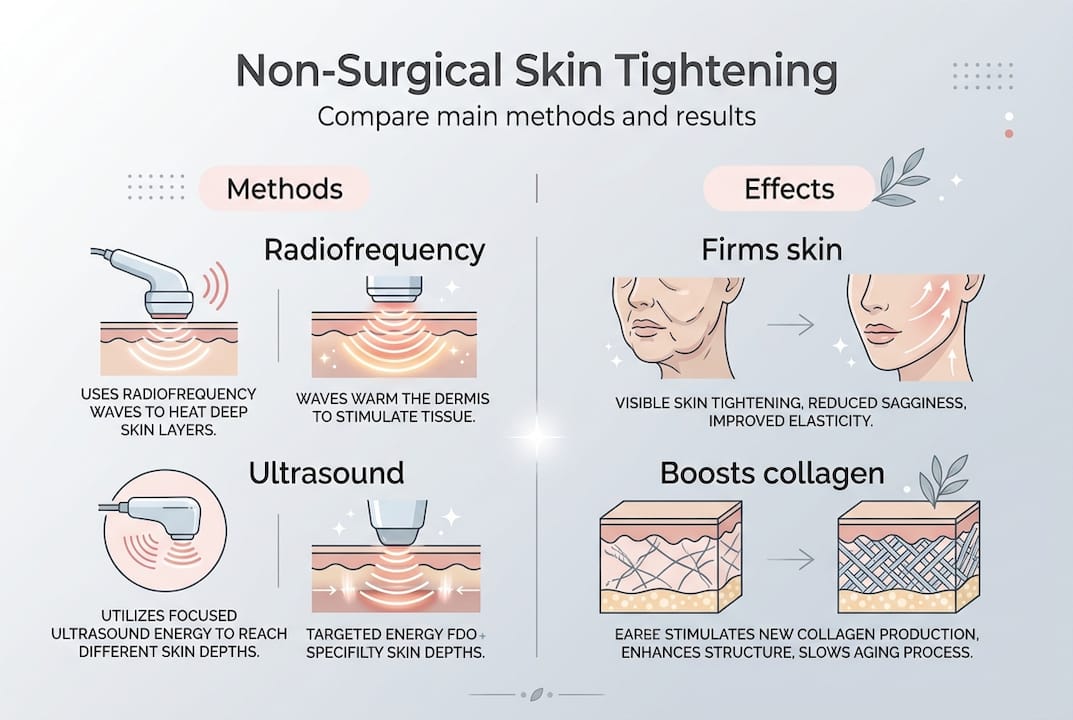
Each of these technologies works by creating a controlled thermal response in the skin. Controlled thermal injury triggers fibroblast activity, collagen contraction, and remodelling over 2 to 6 months. Fibroblasts are the cells responsible for producing collagen, so stimulating them leads to a gradual but meaningful improvement in skin firmness.
It is also worth noting that RF microneedling combines the collagen-stimulating power of radiofrequency energy with the precision of microneedles, making it one of the most effective non-surgical treatments for skin tightening currently available. It works at multiple depths simultaneously, which gives it a distinct advantage over surface-only approaches.
Here is a summary of how each technology compares in terms of mechanism and timeline:
| Technology | Mechanism | Depth targeted | Typical result timeline |
|---|---|---|---|
| Radiofrequency (RF) | Heats dermal tissue evenly | Mid to deep dermis | 2 to 4 months |
| RF microneedling | RF energy via microneedles | Multiple depths | 1 to 3 months |
| Ultrasound (HIFU) | Focused energy for lifting | Deep dermis and SMAS layer | 3 to 6 months |
| Laser | Light energy for surface and dermis | Surface to upper dermis | 1 to 3 months |
A typical course of treatment involves a series of sessions rather than a single appointment. Most adults see the best outcomes after three to six sessions, spaced several weeks apart.
Pro Tip: If you are new to skin tightening, ask your practitioner about combining RF microneedling with a course of HIFU. The two technologies complement each other well, targeting different depths for a more thorough result.
For a closer look at one of these approaches, our laser skin tightening guide covers the specifics in detail.
Comparing radiofrequency, ultrasound, and laser skin tightening
Now that you understand how each technology works, it helps to see them side by side. The right choice depends on your specific concerns, your skin's condition, and how much downtime you can accommodate.
Choosing based on laxity depth is key: RF is versatile and broad in its application, ultrasound provides a deeper lift, and laser addresses texture alongside tightening. Expert matching is essential for personalised outcomes.
Here is a direct comparison to guide your thinking:
| Factor | Radiofrequency | Ultrasound (HIFU) | Laser |
|---|---|---|---|
| Best for | Mild to moderate laxity | Moderate laxity with lifting need | Texture and mild tightening |
| Downtime | Minimal | Minimal to none | Low to moderate |
| Discomfort level | Low to moderate | Moderate | Moderate to high |
| Sessions needed | 3 to 6 | 1 to 3 | 3 to 6 |
| Longevity | 6 to 18 months | Up to 12 months | 6 to 12 months |
It is important to be realistic about what these treatments can achieve. Non-surgical options are best for mild to moderate laxity. In cases of severe sagging or significant excess skin following major weight loss, surgery may be the more appropriate route. Higher-energy treatments such as lasers tend to produce more dramatic results but also carry a slightly higher risk of discomfort and downtime.
Factors to weigh when choosing your treatment:
- Your degree of skin laxity: mild, moderate, or advanced
- Your pain tolerance and comfort with temporary redness or swelling
- Your schedule and how much downtime you can realistically manage
- Your budget and willingness to commit to a course of sessions
- Your skin tone and type, which can influence which technology is safest for you
Pro Tip: Do not choose a treatment based on what worked for a friend. Skin laxity, tone, and structure vary significantly between individuals. A personalised consultation is always the most reliable starting point.
For more on the advantages of specific approaches, our articles on laser treatment benefits and collagen boosting tips offer practical guidance.
What results can you expect? Safety, longevity, and maintenance
One of the most common questions we hear is: how long will this actually last? The honest answer is that it depends on the technology used, the number of sessions completed, and how well you maintain your results afterwards.
Here is what the clinical evidence shows:
- RF and ultrasound produce measurable improvements. MFU-V improved 90 to 100% of subjects at 90 to 180 days, with results lasting up to one year.
- Results are gradual. Most people notice visible changes between two and six months after treatment, as collagen remodelling takes time.
- Maintenance sessions extend longevity. A single top-up session every 6 to 18 months is typically sufficient to sustain results.
- Safety is well established. Safety is high with only minor transient effects such as temporary redness or mild swelling. Choosing a board-certified or qualified provider significantly reduces risk.
- These treatments are not permanent. Ageing continues, and the skin will gradually change over time regardless of treatment.
"The best outcomes come from combining the right technology with realistic expectations and a consistent maintenance plan." — FaceUp Skin Studio
For guidance on caring for your skin between and after sessions, our resources on post-treatment care and anti-ageing skin care are a helpful starting point.
Who should and should not consider non-surgical skin tightening?
Non-surgical skin tightening is not a universal solution. Understanding whether you are a good candidate saves time, money, and disappointment.
You are likely a strong candidate if you:
- Have mild to moderate skin laxity on the face, neck, or body
- Are beginning to notice early signs of ageing such as fine lines, slight sagging, or loss of definition
- Want improvement without surgery or significant downtime
- Are committed to a course of sessions and ongoing maintenance
- Have realistic expectations about gradual, natural-looking results
You may need to consider alternatives if you:
- Have advanced or severe skin sagging that energy-based treatments cannot adequately address
- Have experienced significant weight loss resulting in excess skin
- Have certain medical conditions or skin sensitivities that contraindicate energy-based treatments
- Are pregnant or breastfeeding
Optimal candidates are adults addressing early ageing, with maintenance recommended every 6 to 18 months for sustained results. This is not a one-and-done solution, but for the right person, it is a highly effective and safe approach to looking and feeling more like yourself.
If you are unsure whether you qualify, a professional consultation is the most reliable way to find out. Our guide to choosing a local studio explains what to look for when selecting a trusted provider in your area.
Explore non-surgical skin tightening options in Walthamstow
If you have read this far, you already have a clearer picture of what non-surgical skin tightening can offer and whether it might be right for you. The next step is speaking with a qualified practitioner who can assess your skin in person and recommend the most appropriate treatment plan.
At FaceUp Skin Studio, we specialise in advanced, personalised aesthetic treatments for adults in Walthamstow and across East London. Our approach is always tailored to your individual skin concerns, goals, and lifestyle. Whether you are curious about RF microneedling, HIFU, or a combination approach, we are here to guide you with honesty and expertise. Browse our skin tips and guides for more educational content, or get in touch to book your consultation and take the first step towards firmer, more confident skin.
Frequently asked questions
How long does non-surgical skin tightening last?
Results generally last up to one year, with maintenance sessions recommended every 6 to 18 months to sustain improvement.
Who is a good candidate for non-surgical skin tightening?
Adults with mild to moderate skin laxity and early signs of ageing are the best candidates for these treatments.
Is non-surgical skin tightening safe?
Yes. Safety is well established, with most people experiencing only minor, temporary side effects such as redness or mild swelling.
How soon do I see results from skin tightening treatments?
Visible results typically begin to appear between 2 to 6 months after treatment, as collagen production and remodelling take time to develop fully.