

Most people assume that walking out of a lip filler appointment means walking straight into perfect, plump results. The reality is a little different. What you do in the hours and days after treatment shapes everything, from how natural your lips look to how long the results actually last. Aftercare is not an optional extra; it is the difference between lips that look effortlessly beautiful and ones that take far longer to settle. This guide covers everything you need to know, from what to expect immediately after treatment to the warning signs that mean it is time to call your practitioner.
Key Takeaways
| Point | Details |
|---|---|
| Immediate aftercare matters | Proper care right after treatment helps ensure minimal swelling and optimal results. |
| Avoid common mistakes | Prevent issues by following your professional’s do’s and don’ts for healing lips. |
| Aftercare affects longevity | How you treat your lips directly influences how long your filler lasts and looks natural. |
| Know the warning signs | Seek professional help quickly for unusual pain or symptoms after lip fillers. |
What to expect immediately after lip filler treatment
The first thing most clients notice after leaving the clinic is that their lips look bigger than intended. Do not panic. Swelling and minor bruising are a completely normal part of the process, and they do not reflect your final result. Your lips need time to settle, and the swelling you see in the mirror on day one is not the finished look.
In the first 24 to 48 hours, you can expect a range of sensations and visible changes. Tenderness around the injection sites is common, and your lips may feel firm or slightly lumpy to the touch. This is the filler integrating with your tissue, not a sign that something has gone wrong. Most clients find that the majority of swelling reduces within three to five days, with lips fully settling after around two weeks.
Here is a quick guide to what is normal and what is not:
-
Normal: Swelling, redness, tenderness, minor bruising, slight asymmetry in the first few days
-
Normal: Small bumps or firmness that soften over time
-
Not normal: Severe or worsening pain after 48 hours
-
Not normal: White or grey patches on or around the lips
-
Not normal: Fever, spreading redness, or signs of infection
Factors such as your skin type, the amount of filler used, and your body’s individual response all influence how quickly you recover. Thinner skin tends to show bruising more visibly, while larger volumes of filler can mean slightly more swelling. For insights and advice from beauty professionals about recovering after lip filler, speaking to your practitioner before treatment is always a smart move.
Key steps for optimal lip filler aftercare
Knowing what is normal is helpful, but practical aftercare is what shapes your final results. The steps you take in the first 48 hours carry the most weight, so it is worth being intentional about them.
Here are the core aftercare steps to follow:
-
Stay hydrated. Hyaluronic acid fillers, the most common type used for lips, attract and bind water. Drinking plenty of water supports the filler in settling evenly and keeps your lips looking plump and healthy.
-
Apply a cold compress. A clean, cold flannel or wrapped ice pack applied gently to the lips reduces swelling and soothes tenderness. Do this in short intervals of ten minutes on, ten minutes off.
-
Keep your lips clean. Avoid touching your lips with unwashed hands. The injection sites are tiny entry points that can be vulnerable to bacteria in the first day or two.
-
Sleep with your head elevated. Lying flat can encourage fluid to pool around the treatment area. Propping yourself up with an extra pillow helps reduce overnight swelling.
-
Avoid makeup on the lips for at least 24 hours. Lip products can introduce bacteria and irritate fresh injection sites before they have had a chance to close properly.
-
Skip strenuous exercise for 24 to 48 hours. Increased blood flow from exercise can worsen bruising and swelling.
Proper aftercare can minimise swelling and significantly improve your overall outcome, which is why practitioners spend time going through these steps with you after treatment.
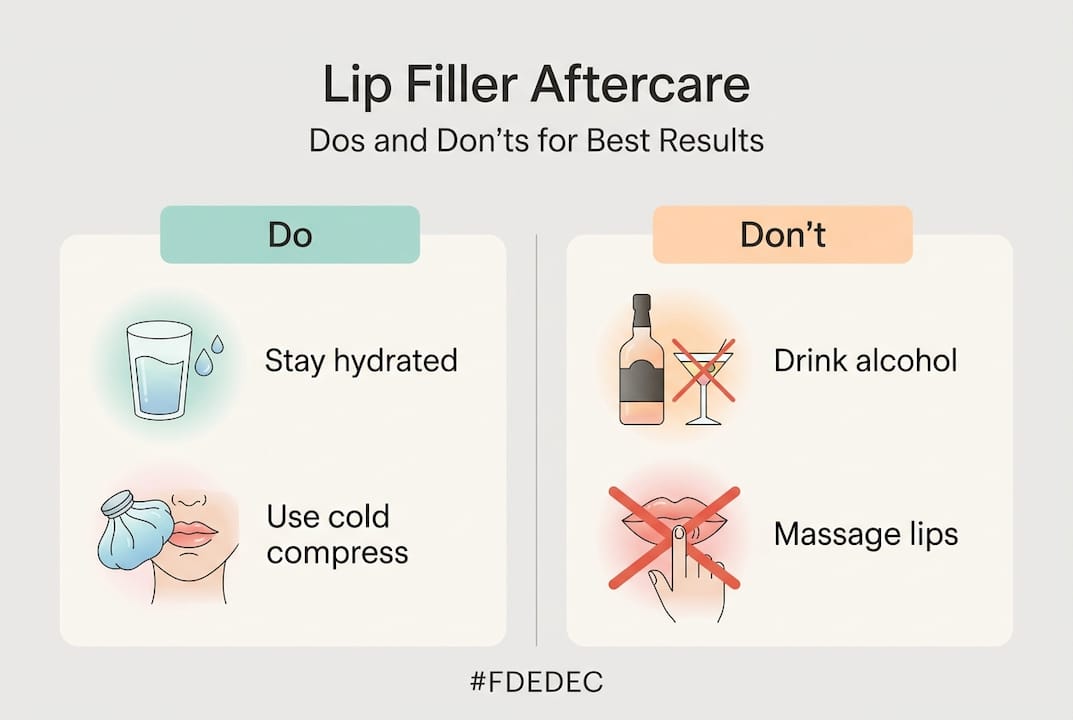
Do’s and don’ts for the first 48 hours:
| Do | Don’t |
|---|---|
| Drink plenty of water | Drink alcohol |
| Use a cold compress gently | Massage or press your lips |
| Rest and sleep elevated | Exercise intensely |
| Keep lips clean | Apply lipstick or gloss |
| Take arnica supplements if advised | Take blood-thinning medication unless prescribed |
Pro Tip: Every person’s lips and skin respond differently to filler. The best way to get aftercare advice that actually fits your situation is to ask your practitioner for expert recovery tips after lip filler tailored specifically to the product used and the volume injected.
Common pitfalls and how to avoid them
Even with the best instructions, it is easy to get tripped up by what feels like innocent habits. Some of the most common post-filler mistakes are things people do without thinking, and they can genuinely affect your results.
Here are the pitfalls to watch out for:
-
Massaging your lips. It might feel tempting if you notice a small lump, but massaging can displace the filler before it has had time to integrate properly.
-
Using a straw. The repeated puckering motion puts pressure on the lips and can shift filler placement in the first few days.
-
Eating very hot food or drinking hot beverages. Heat increases blood flow and can worsen swelling. Stick to lukewarm or cool foods for the first 24 hours.
-
Wearing tight face masks or applying pressure to the lips. Anything that compresses the lips can affect the shape of the filler while it is still settling.
-
Booking a facial, massage, or dental appointment too soon. Any treatment that involves pressure around the mouth should be avoided for at least two weeks.
Certain activities can increase swelling or affect filler placement, which is why the first 48 hours require a little more care than people often anticipate.
“The most common mistake we see is clients touching or pressing their lips in the first few days. The filler needs time to settle into its final position. Trust the process and keep your hands away.” A sentiment shared by experienced aesthetic practitioners across the industry.
If you are ever unsure whether something you are doing could be affecting your results, it is always better to check. Reviewing common mistakes after getting lip fillers with your practitioner before you leave the clinic means you are less likely to be caught out at home.
How lip filler aftercare influences final results
With a clear understanding of what to avoid, it is time to see how everyday choices can genuinely transform your experience. Aftercare is not just about managing side effects; it directly determines how your lips look once everything has settled.
The table below shows the difference that diligent aftercare can make:
| Outcome | Excellent aftercare | Poor or lax aftercare |
|---|---|---|
| Swelling duration | Reduces within 3 to 5 days | Can persist for 1 to 2 weeks |
| Final shape | Smooth and even | Potentially uneven or lumpy |
| Bruising | Minimal and short-lived | More pronounced and longer-lasting |
| Longevity of results | Up to 12 months or more | May break down faster |
| Overall satisfaction | High | Often leads to follow-up corrections |
Patients following aftercare consistently report better, longer-lasting results, which makes the effort genuinely worthwhile. The shape of your lips, the smoothness of the filler, and even how long it lasts before a top-up is needed are all influenced by how well you look after yourself in the days following treatment.
Swelling can mask the true shape of your lips for up to two weeks. This is why it is important not to judge your results too early. What looks uneven or overfilled on day two often looks completely natural by day fourteen. Patience is genuinely part of the process.
Pro Tip: Book a follow-up appointment two weeks after your treatment. This gives your practitioner the chance to assess the importance of post-filler care in your specific case and make any minor adjustments if needed. It is also a great opportunity to ask questions and plan ahead for your next treatment.
When to seek professional help after lip fillers
Good care means not just looking after yourself at home, but knowing when it is time to consult a professional. Most post-filler experiences are straightforward, but complications, while rare, do happen and early action makes a significant difference.
Contact your practitioner or seek medical attention if you notice any of the following:
-
Severe or worsening pain that does not improve after 48 hours
-
White, grey, or blue discolouration on or around the lips, which can indicate a vascular issue
-
Fever or flu-like symptoms developing after treatment
-
Spreading redness or warmth around the injection sites, which may suggest infection
-
Significant asymmetry or hard lumps that persist beyond two weeks
-
Vision changes or severe headache in the hours following treatment
Rare complications need prompt attention from a qualified practitioner. Vascular occlusion, where filler inadvertently affects blood supply, is uncommon but requires immediate treatment. The sooner it is addressed, the better the outcome.
For clients in Walthamstow, having access to a local clinic means you are never far from professional support for lip filler complications if you need it. Knowing your practitioner is nearby and reachable gives real peace of mind, particularly in those first few days after treatment.
Expert aftercare from trusted professionals in Walthamstow
Getting the right support after lip fillers makes an enormous difference to your results and your confidence. At FaceUp Skin Studio, we understand that the treatment itself is only part of the journey.

Our practitioners in Walthamstow are experienced in guiding clients through every stage of their aesthetic journey, from pre-treatment consultations to post-treatment follow-ups. We take the time to understand your goals and provide personalised aftercare advice based on the specific treatment you have received. Whether you are considering your first lip filler appointment or looking to refine previous results, our team is here to support you. Explore our full range of FaceUp Skin Studio services and book a consultation to get expert guidance tailored to you.
Frequently asked questions
How long does swelling last after lip fillers?
Swelling is usually short-lived after lip fillers, typically peaking within 24 to 48 hours and subsiding within a few days, though it can take up to a week to fully resolve.
When can I wear lipstick after lip fillers?
Waiting 24 hours before using lip products is recommended to reduce the risk of infection and allow the injection sites to close properly before anything is applied.
What should I avoid after getting lip fillers?
Certain habits can increase swelling and infection risk, so avoid touching your lips, exercising intensely, drinking alcohol, and consuming hot food or drinks for at least 24 to 48 hours.
Is it normal for lips to feel uneven after treatment?
Temporary unevenness is often due to swelling post-procedure and usually resolves as the filler settles. If unevenness persists beyond two weeks, consult your practitioner for an assessment.