
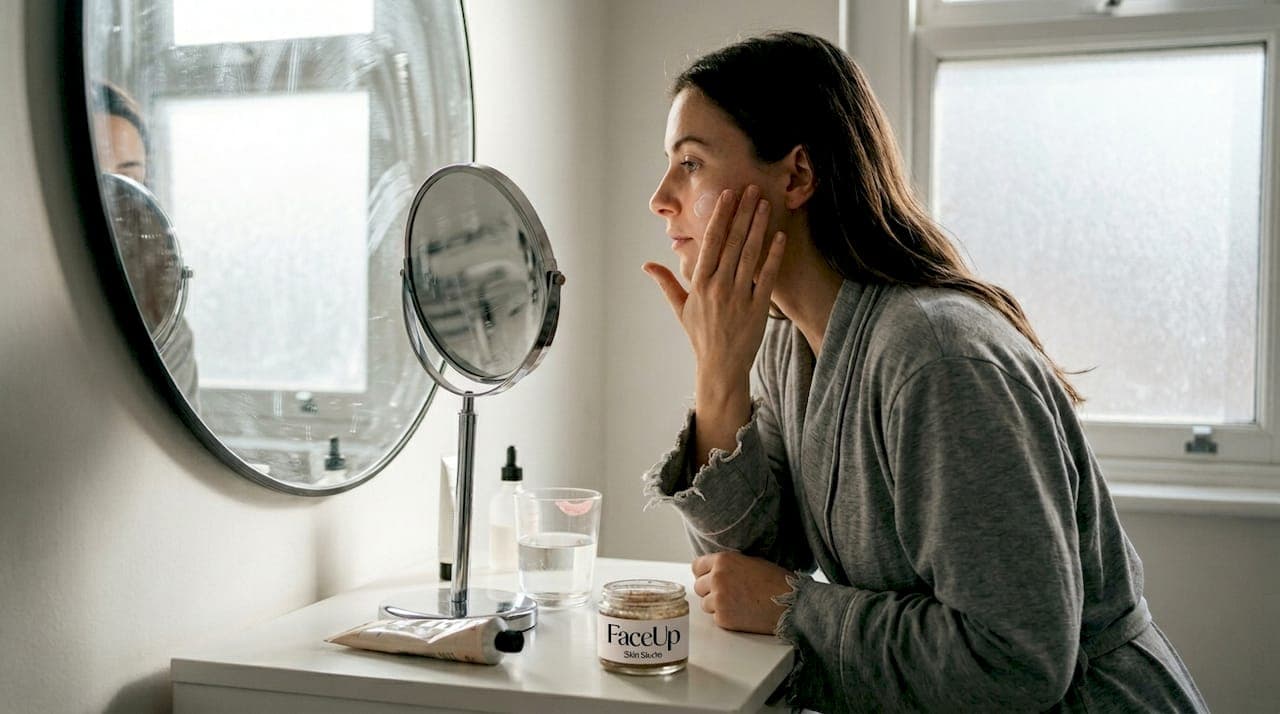
Rough patches, enlarged pores, and uneven tone are among the most common skin concerns we hear about at FaceUp Skin Studio. Many people spend months cycling through cleansers, scrubs, and serums, only to find their skin still feels bumpy or looks dull. The frustration is real, and it is often rooted in using generic routines that were never designed for your specific skin. This guide walks you through the causes of poor skin texture, the most effective treatments available today, and how a personalised approach can deliver the smooth, healthy skin you are working towards.
Key Takeaways
| Point | Details |
|---|---|
| Personalisation is key | Bespoke skincare plans informed by genetic and AI analysis deliver the most consistent improvements in skin texture. |
| Progress requires steps | Combining at-home routines and professional treatments yields faster, longer-lasting results. |
| Monitor and adjust | Regularly check progress and update your regimen to maintain a smoother, healthier complexion. |
| Safe options exist | Advanced treatments and combination therapies are available for all skin types, including sensitive and darker skin. |
Understanding skin texture issues
Before diving into treatments, it is vital to understand what causes skin texture concerns and why a tailored approach matters. Skin texture refers to the surface quality of your skin. When it is functioning well, skin feels smooth, looks even, and reflects light consistently. When something disrupts that balance, you may notice:
- Roughness or dryness that feels sandpaper-like to the touch
- Enlarged or congested pores that appear more prominent, especially around the nose and cheeks
- Bumps or milia (small white cysts) caused by trapped keratin
- Post-acne scarring or pitting that alters the skin's surface
- Uneven tone from sun damage, hyperpigmentation, or ageing
These concerns share a common thread: disrupted cell turnover and compromised collagen production. As we age, the skin's natural renewal cycle slows. Sun exposure accelerates collagen breakdown. Acne leaves behind structural damage. And without targeted exfoliation, dead skin cells accumulate, making the surface look and feel rough.
Understanding skin health fundamentals is the first step towards choosing the right solution. Generic routines often fail because they address symptoms rather than root causes. A cleanser that works brilliantly for oily skin may strip and irritate dry or sensitised skin, worsening texture over time.
Key insight: Chemical peels exfoliate outer skin layers, accelerating collagen synthesis and improving texture, scars, and tone. This is why evidence-based, targeted treatments consistently outperform standard high-street routines.
Following best practices for skin care means recognising that your skin is unique. Factors such as your Fitzpatrick skin type, hormonal profile, lifestyle, and environment all influence which treatments will work best for you.
Essential steps to improve your skin texture
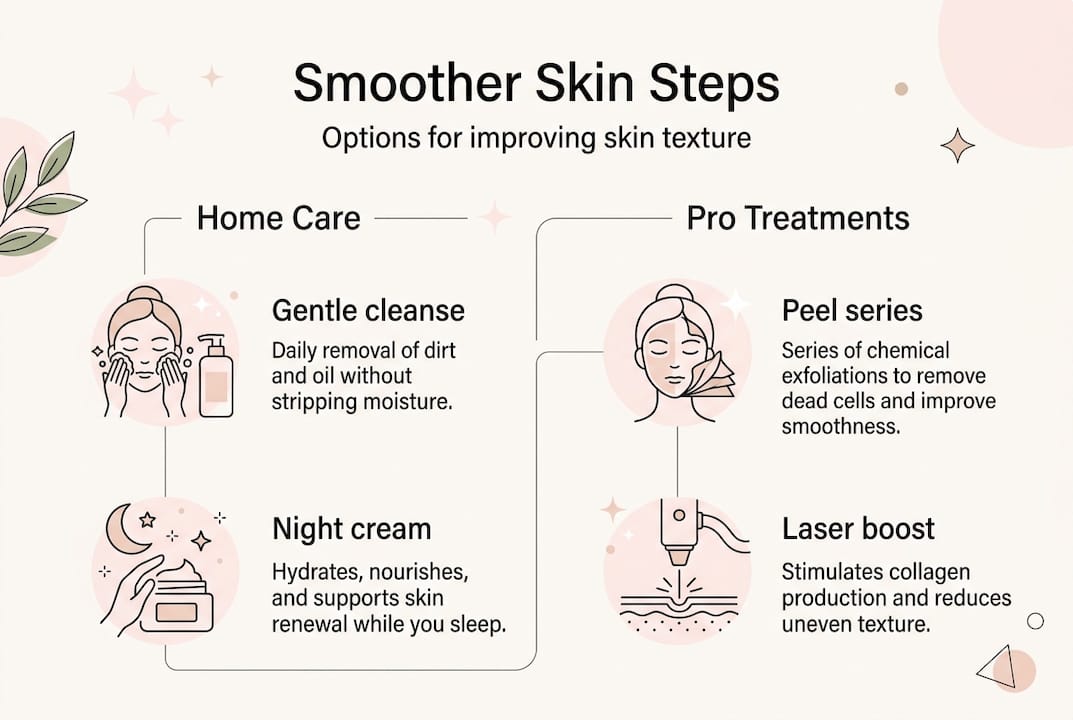
With the causes clear, let us walk through the practical steps, from at-home care to professional options, so you can select what fits your needs.
- Gentle daily cleansing. Use a pH-balanced cleanser morning and evening. Avoid harsh foaming formulas that strip the skin barrier, as a compromised barrier is one of the leading causes of rough, reactive skin.
- Targeted exfoliation. Incorporate a chemical exfoliant such as glycolic acid (AHA) or salicylic acid (BHA) two to three times per week. These dissolve the bonds between dead skin cells without the micro-tears caused by physical scrubs.
- Consistent sun protection. Apply a broad-spectrum SPF 30 or higher every morning. UV exposure is one of the primary drivers of collagen degradation and uneven texture.
- Hydration and barrier support. Use a moisturiser containing ceramides, hyaluronic acid, or niacinamide to reinforce the skin barrier and maintain suppleness.
- Professional treatments. When at-home care reaches its limit, clinic-based options such as chemical peels, radiofrequency (RF), and low-fluence lasers deliver measurable improvements that topicals alone cannot achieve.
- Personalised assessment. A bespoke plan, informed by genetic analysis, lifestyle factors, and AI-assisted skin mapping, consistently outperforms one-size-fits-all routines.
Professional facials for texture offer a level of precision that home care simply cannot replicate. A trained practitioner can assess your skin in real time and adjust the treatment accordingly.
Pro Tip: Do not layer multiple active ingredients at once when starting out. Introduce one new product every two weeks so you can accurately identify what is working and what may be causing irritation.
Chemical peels are suitable for mild to moderate texture concerns and show cumulative benefits after a series of treatments. Meanwhile, personalised skincare using genetic and AI analysis delivers significant improvements in hydration, elasticity, and smoothness compared to standard regimens. These are not trends; they are evidence-backed approaches that are reshaping how we treat skin in 2026.
Building daily anti-ageing practices into your routine creates a strong foundation before any professional treatment begins.
Overview: Tools, treatments, and personalised options
It helps to see your options side by side, so you can efficiently choose between home care, in-clinic, and bespoke approaches.
| Option | Best for | Strength | Ideal candidate |
|---|---|---|---|
| AHA/BHA exfoliants | Mild roughness, dullness | Accessible, consistent use | Most skin types |
| Retinoids | Fine lines, slow cell turnover | Clinically proven long-term | Tolerant skin |
| Chemical peels | Scars, uneven tone, texture | Varying intensities for all concerns | Mild to moderate concerns |
| Radiofrequency (RF) | Laxity, enlarged pores | Collagen stimulation, safe for darker skin | All Fitzpatrick types |
| Low-fluence laser | Pigmentation, scarring | Precision targeting | Experienced practitioner required |
| AI personalised plan | Complex or persistent concerns | Outperforms standard routines | Anyone seeking optimised results |
Exploring non-surgical studio treatments gives you a clearer picture of what is available without surgery or significant downtime. For those considering energy-based options, understanding laser treatment benefits can help you weigh up whether this route suits your skin goals.
Personalisation is the factor that consistently increases success rates. When your treatment plan accounts for your skin type, lifestyle, and specific concerns, the results are more predictable and more lasting.
How professional treatments enhance skin texture
Many people find the biggest improvements come through expert-led treatments. Let us look at what makes them effective and safe.
Chemical peels work by removing the outermost layers of skin, triggering the body's natural repair response. This accelerates collagen synthesis and encourages fresh, smoother skin to surface. Radiofrequency treatments deliver controlled heat energy deep into the dermis, stimulating collagen and elastin without damaging the surface. Low-fluence lasers target pigmentation and scarring with precision, making them particularly effective for post-acne texture.
Combining treatments is where results become especially impressive. Combining topicals with radiofrequency can double recovery speed and significantly reduce swelling and irritation compared to RF alone. This means less downtime and faster visible improvement for you.
Safety is a priority, particularly for those with darker skin tones. RF is safe for Fitzpatrick III-V skin types, and when combined with peptide-based topicals, patients experience two-fold less swelling. This is reassuring news if you have previously been told that certain treatments are not suitable for your skin tone.
Pro Tip: Always request a patch test and a thorough skin assessment before any professional treatment. A reputable clinic will never skip this step, and it protects you from avoidable reactions.
Key benefits of professional treatments include:
- Measurable collagen stimulation that improves skin firmness and smoothness over time
- Targeted action on specific concerns such as scarring, enlarged pores, or pigmentation
- Reduced downtime when treatments are combined intelligently
- Safe protocols for a wide range of skin types and tones
Learning about lasers for texture improvement can help you understand how energy-based treatments work at a cellular level. For those interested in cutting-edge regenerative options, exosome therapy is an emerging treatment that supports skin repair and renewal. If you are new to professional treatments, navigating the rejuvenation process offers a helpful overview of what to expect at each stage.
Verifying progress and maintaining your results
Once you have begun your journey, keeping track of progress and adapting your routine ensures you hold onto your results for the long haul.
Tracking improvement does not require clinical equipment. You can assess your skin effectively at home by following these steps:
- Visual check. Take consistent photographs in the same lighting every four weeks. Look for changes in pore size, surface smoothness, and evenness of tone.
- Touch test. Run your fingertips across your cheeks and forehead. Smoother skin with fewer rough patches is a reliable sign of progress.
- Hydration and elasticity. Pinch the skin gently on the back of your hand. If it springs back quickly, your skin's elasticity is improving.
- Sensitivity monitoring. Note any increase in redness, tightness, or breakouts. These may signal that a product or treatment needs adjusting.
- Professional review. Book a follow-up consultation every three to six months to reassess your skin and update your plan as needed.
Remember: Skin improvement is not linear. You may notice rapid changes in the first few weeks, followed by a plateau. This is normal. Consistency and patience are what separate lasting results from temporary fixes.
Personalisation yields continued improvement in texture and hydration over standard routines, particularly when the plan is reviewed and updated regularly. This is why a bespoke approach is not just a luxury; it is a practical strategy for long-term skin health.
For sustained hydration and plumpness, skin boosters are an excellent complement to texture-focused treatments. They work beneath the surface to maintain the moisture levels that keep skin looking smooth and healthy. Revisiting how to measure skin health progress periodically helps you stay aligned with your goals and make informed decisions about next steps.
Seasonal changes also affect your skin. Adjust your routine in winter to focus on barrier repair and richer hydration, and in summer to prioritise sun protection and lighter formulations.
Personalised support for smoother, healthier skin
You now have a clear framework for understanding, treating, and maintaining improved skin texture. But having a plan is only part of the picture. Knowing where to find expert guidance makes all the difference.
At FaceUp Skin Studio in Walthamstow, we specialise in advanced, non-surgical treatments tailored to your unique skin profile. Whether you are dealing with post-acne scarring, enlarged pores, or persistent roughness, our practitioners will design a treatment plan that is safe, evidence-based, and built around your goals. From chemical peels and radiofrequency to personalised skincare consultations, every service is delivered with precision and care. Browse our skin health articles for further guidance, or get in touch to book your bespoke skin assessment today. Smoother, healthier skin is achievable, and we are here to help you get there.
Frequently asked questions
What causes uneven skin texture?
Uneven skin texture is most commonly caused by sun exposure, ageing, past acne, genetics, and insufficient exfoliation. These factors disrupt collagen synthesis and exfoliation, leading to a rough or uneven surface.
Are there treatments for sensitive or darker skin types?
Yes. Radiofrequency and personalised regimens are well-suited to sensitive or darker skin, with evidence showing RF is safe for Fitzpatrick III-V skin types and produces significantly less irritation when combined with appropriate topicals.
How soon can I see results from skin texture treatments?
Visible improvement often appears within four to six weeks, particularly with combined or personalised approaches. In one study, elasticity improved from 25% to 44% in just 28 days with a personalised skincare plan.
Can I combine treatments for best results?
Absolutely. Combining treatments such as radiofrequency with targeted topicals is highly effective. Combination therapy doubles recovery speed and reduces irritation, making it a smart strategy for faster, more comfortable results.
Recommended
- How to navigate the skin rejuvenation process in 2026
- Best practices for skin care: proven anti-aging methods
- What is skin health: expert guide to personalised care 2026
- Your ultimate 2026 skin care checklist for pigmentation
- Top tips for autumn skincare - The Aesthetics Room
- Tutorial for flawless skin: simple steps for men – NORML